Wedding Florist Budget: What 2026 Pricing Actually Looks Like
Quick answer: In 2026, expect to spend $1,500-$3,500 on florals for an intimate wedding under 50 guests, $3,500-$8,000 for a mid-size wedding of 50-120 guests, and $8,000-$25,000 or more for a large or design-forward wedding. As a starting baseline, allocate 8-12% of your total wedding budget to florals. The full line-item breakdown by scale is below.
Wedding florals are one of the most opacity-prone line items in a wedding budget. The numbers vary by region, season, scale, and design ambition. Florists themselves rarely publish prices, which means couples often start the search without any baseline for what is reasonable.
I owned a flower shop in suburban Chicago for fifteen years and priced roughly six hundred weddings during that time. What follows is a real pricing breakdown for 2026, by wedding scale and by line item, with notes on why each component costs what it costs.
This is the version of the budget that I would explain at a consultation. Specific dollar ranges, what each component covers, and where couples typically over- or under-spend.
Here is the budget by wedding scale before the line-item detail.
| Wedding scale | Guest count | Total 2026 floral budget | What it typically covers |
|---|---|---|---|
| Intimate | Under 50 | $1,500 to $3,500 | Bridal bouquet, a few personals, 5 to 8 centerpieces, one small ceremony piece |
| Mid-size | 50 to 120 | $3,500 to $8,000 | Fuller personals, 10 to 15 centerpieces, medium arch or altar, head-table florals |
| Large or design-forward | 120+, or any size with elaborate design | $8,000 to $25,000+ | Hanging installations, full ceremony structures, repeated motifs, premium imported stems |
Source note: ranges reflect full-package 2026 pricing and a baseline of 8 to 12 percent of total wedding budget toward florals. National averages run lower because most weddings are small and simple: The Knot's wedding flower cost data reports an average near $2,800, while WeddingWire's flowers cost guide puts the typical spend between $700 and $2,500.
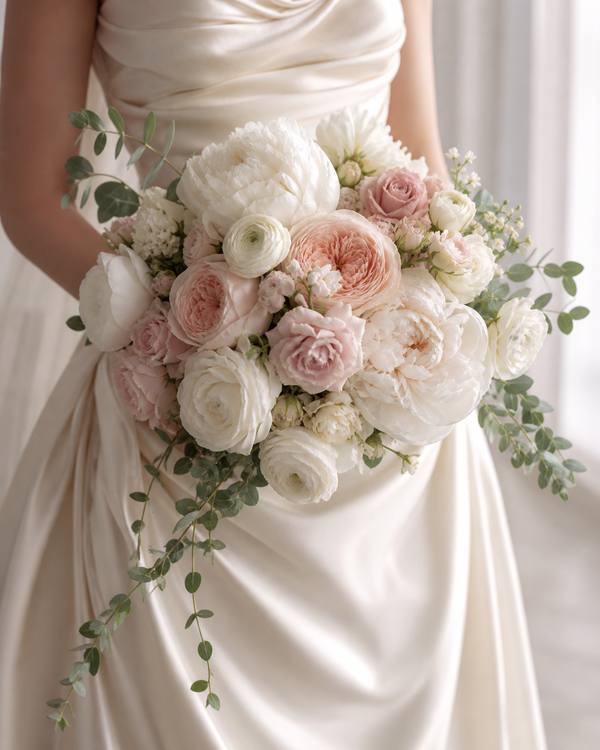
How florist pricing actually works
Before the line items, the structural piece. Wedding florist pricing is built up from four cost components, regardless of which florist you use:
Stems (raw flowers). Roughly 35-40% of the total. Sourced from wholesale markets, often shipped from international growers (Colombia, Ecuador, Holland). Pricing varies by season, demand, and which specific varieties are in the design.
Labor. Roughly 25-30%. Design time, processing time, building time. A team of designers often spends two to three days before the wedding processing flowers, prepping containers, and building arrangements. Wedding labor is more skilled than retail labor and is paid accordingly.
Logistics. Roughly 10-15%. Delivery to the venue, setup, breakdown after the reception, vehicle costs, hourly rate for setup crew. Day-of logistics are a real cost.
Rentals and structural. Variable, often 5-15%. Vases, candles, arches, ceremony structures, garden urns, hanging installations. Some weddings have minimal rentals; others build the entire room around custom installations.
Studio overhead and margin. Roughly 15-20%. The florist needs to make a living and cover their fixed costs.
When you see a $5,000 wedding florist quote, it breaks down roughly to: $1,800 stems, $1,400 labor, $700 logistics, $400 rentals, $700 margin and overhead.
This is true at every price point. The mix shifts (very high-end weddings have higher margin shares; budget weddings have lower margins and tighter labor); the structure does not.
Pricing by wedding scale
Below are realistic 2026 ranges for full wedding floral packages. These assume a typical design ambition for the budget level (more elaborate at higher tiers, simpler at lower tiers).
Intimate wedding (under 50 guests)
Total floral budget: $1,500 to $3,500
Common breakdown:
- Bridal bouquet: $200-$400
- 2-3 bridesmaid bouquets: $80-$130 each
- Boutonnieres for groom and groomsmen: $20-$35 each
- 2-4 corsages for parents/grandparents: $25-$45 each
- 5-8 reception centerpieces: $75-$200 each
- Ceremony arrangement (small altar piece or arch): $200-$500
- Cake flowers: $40-$80
Where you can save: skip the cake flowers, simplify the ceremony arrangement, use seasonal stems instead of imported.
Mid-size wedding (50-120 guests)
Total floral budget: $3,500 to $8,000
This is the typical mid-American wedding florist package and the most common pricing tier I worked with.
Common breakdown:
- Bridal bouquet: $300-$500 (often more elaborate at this tier)
- 4-6 bridesmaid bouquets: $100-$160 each
- Boutonnieres for groom and groomsmen: $25-$40 each
- 4-8 corsages for parents/grandparents: $30-$50 each
- 10-15 reception centerpieces: $100-$280 each
- Ceremony arrangement (medium altar piece, arch, or pedestals): $400-$1,200
- Aisle flowers or chair florals: $200-$600
- Cake flowers: $50-$100
- Sweetheart table or head table garland: $300-$800
Where you can save: alternate "tall" and "low" centerpieces (tall ones cost more, mixing reduces total stems needed), use seasonal local-grown stems for greenery rather than imported.
Large or design-forward wedding (120+ guests, or any size with elaborate design)
Total floral budget: $8,000 to $25,000+
The variance at this tier is wide because design ambition varies wildly. Two weddings of the same guest count can have radically different floral budgets depending on how much the couple wants installations, hanging florals, repeated motifs, and full ceremony structures.
Common features at this tier:
- Bridal bouquet $500-$900
- Multiple bridesmaid bouquets at $130-$200 each
- Reception centerpieces $200-$500 each
- Hanging installations (suspended florals, chandelier accents, ceiling pieces): $1,500-$8,000+
- Full-arch ceremony installations: $1,200-$4,000
- Aisle linings, garlands, hedges: $800-$3,000
- Cocktail-hour florals (separate from reception): $500-$2,000
- Large floral entrances or photo backdrops: $800-$3,000
Where the spend goes: repeated motifs across the venue, custom-built structures, premium imported flowers (peonies in February, garden roses out of season).
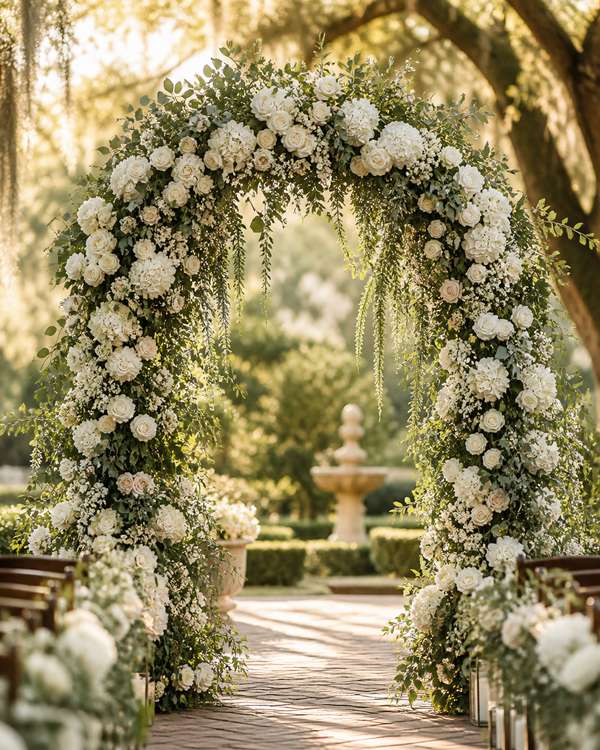
Stem-by-stem cost ranges
Some flowers cost more than others. The choice of stem dramatically affects the total budget.
Most expensive (premium stems):
- Garden roses: $8-$15 per stem at wholesale
- Peonies (in season May-June): $6-$12 per stem; out of season $15-$25
- Phalaenopsis orchids: $20-$35 per stem
- Anthurium: $8-$15 per stem
- Calla lilies: $5-$10 per stem
Mid-range stems:
- Standard roses: $2-$4 per stem
- Hydrangeas: $5-$8 per stem
- Tulips: $2-$4 per stem
- Ranunculus: $4-$7 per stem
- Lisianthus: $3-$5 per stem
Budget stems:
- Carnations: $1-$2 per stem
- Mums: $1-$3 per stem
- Daisies: $1-$2 per stem
- Standard greenery (eucalyptus, salal, ferns): $0.50-$2 per stem
A bridal bouquet uses 25-50 stems depending on size and density. A centerpiece uses 15-30 stems. A ceremony arch uses 100-300 stems plus structural greenery.
If you want to control budget without sacrificing visual impact: build the design around mid-range stems with one or two premium-stem accents per arrangement. Three garden roses tucked into a hydrangea-and-eucalyptus base looks expensive at one-third the cost of an all-garden-rose arrangement.
How to read a florist's quote
A quote should itemize the major components. Vague quotes ("$5,000 for everything") are a flag.
The quote you want to see breaks out:
- Personal florals (bouquets, boutonnieres, corsages): listed by quantity
- Ceremony florals: by piece (altar arrangement, arch, aisle markers, etc.)
- Reception florals: by table type (centerpieces, head table, sweetheart table, cocktail hour)
- Cake flowers: separate line item
- Installation, delivery, and setup labor: separate line item, often 15-20% of subtotal
- Rentals: by item (vases, candles, structures), often noted as either rental or purchase
- Tax: separate, since most regions tax wedding floral services
- Service fee or design fee: sometimes included in subtotal, sometimes separate
What to compare across quotes:
- Price per centerpiece. Most consistent comparison metric. A $150 centerpiece at one florist and a $250 centerpiece at another should be visually distinguishable; if not, the higher-priced florist may be over-charging.
- Bridal bouquet price. Easy comparison; varies by florist style and stem choices.
- Whether installation is included. A $4,500 quote that includes installation can be a better value than a $4,000 quote where installation is $800 extra.
- Whether breakdown is included. Some florists do not include after-reception breakdown; you have to handle it yourself or pay another team.
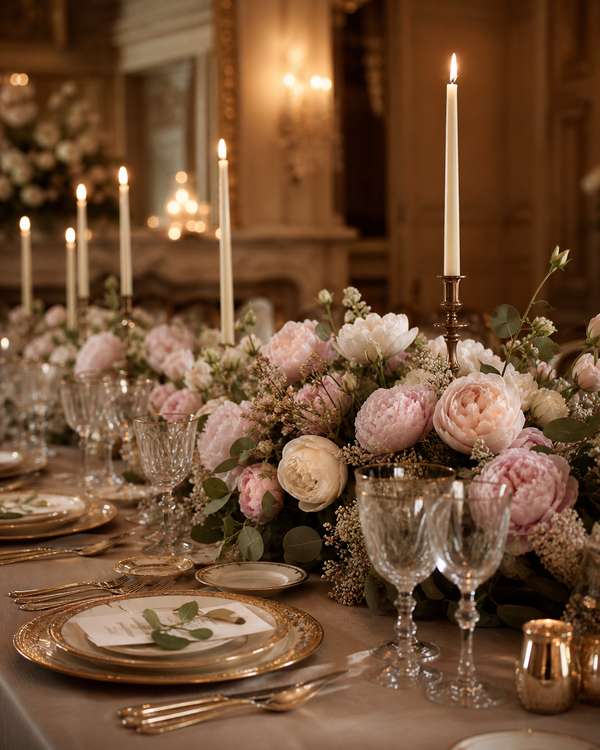
Where couples typically over-spend
A few categories where I watched couples over-spend without realizing.
Boutonnieres for distant relatives. A boutonniere for a great-uncle who attends your wedding once and never wears another flower in his life is a $35 line item that does not need to exist. Reserve boutonnieres for the wedding party (groom, groomsmen, and the immediate fathers).
Aisle florals in long-aisle ceremonies. Lining a 60-foot aisle with floral pieces every 4 feet adds 15 expensive components. Skip the aisle markers entirely and put the spend into the altar arrangement or arch, which everyone actually photographs.
Multiple ceremony altar arrangements when one would do. Some couples request two flanking arrangements when a single centered arch or piece would have been more visually striking. Consolidate.
Tall centerpieces at every table. Tall centerpieces are 2-3x the cost of low centerpieces. Mixing tall and low (typically 1 in 3 or 1 in 4 tables tall) keeps the visual impact while controlling cost.
Custom installations photographed once. A $3,000 hanging chandelier of greenery photographs beautifully but is seen by guests for about three hours and disposed of afterward. Worth doing if the budget supports it. Worth skipping if it pulls budget from the line items everyone interacts with (centerpieces, bouquet, ceremony arch).
Where couples typically under-spend
The flip side.
The bridal bouquet. This is the single most photographed floral element of the wedding. The portraits of the bride holding the bouquet are in every album. Spending $200 on a bouquet for a wedding with $4,000 in florals is under-spending. Spend $350-$450 here.
The ceremony focal point. Every guest looks at the ceremony focal point for the entire ceremony. It is the backdrop for every kiss-and-recess photo. Skimping here to spend on reception centerpieces is a common mistake; the centerpieces are seen by guests at their table only.
Sweetheart table or head table florals. The bride and groom sit here for the entire reception. The florals are in every reception photograph. This is one of the under-budgeted areas; couples often default to a small arrangement when a more substantial one is appropriate.
Booking timeline and how to find the right florist
For pricing in this article to be actionable, you need a florist. The selection process is its own topic. Our sister site Local Florists has the full guide on choosing a wedding florist, which covers consultations, what questions to ask, and how to evaluate three quotes side by side.
Booking timeline: 8-10 months before the wedding for established florists in major markets. See When to Book Each Wedding Vendor for the full vendor sequence.
What I tell couples who ask me
Wedding florists are one of the easier vendors to right-size if you understand the cost structure. The pricing is rational once you see what is in the quote. The pricing also has real flex points (stem choices, design ambition, installation scope) that let you adjust without hurting the visual.
If you are starting from scratch, allocate 8-12% of your total wedding budget to florals as a starting baseline. Get three quotes from florists in your tier. Compare on price-per-centerpiece, what is included, and how the consultation felt. Pick the one whose quote was most clearly itemized; transparency in the quote correlates with transparency at the wedding.
Then trust the florist to do their work. The couples who got the best wedding florals were the ones who hired the right florist and let them design.
Frequently Asked Questions
How much do wedding flowers cost in 2026?
Total floral budgets run roughly $1,500-$3,500 for an intimate wedding under 50 guests, $3,500-$8,000 for a mid-size wedding of 50-120 guests, and $8,000-$25,000 or more for a large or design-forward wedding. The variance at the top tier is wide because installations, hanging florals, and full ceremony structures drive cost more than guest count does.
What percentage of my wedding budget should go to flowers?
Allocate 8-12% of your total wedding budget to florals as a starting baseline. The lower end fits a simple wedding with mostly seasonal stems and modest centerpieces; the upper end fits substantial ceremony installations and elaborate centerpieces.
How much should I spend on a bridal bouquet?
Bridal bouquets range from $200-$400 for an intimate wedding up to $500-$900 at the design-forward tier. Because the bouquet is the single most photographed floral element, spend $350-$450 even when other floral budgets are tight. It is the most common place couples under-spend.
How can I lower my wedding flower costs without it looking cheap?
Build arrangements around mid-range stems with one or two premium accents, for example a few garden roses tucked into a hydrangea-and-eucalyptus base. Mix tall and low centerpieces (tall ones cost 2-3x more), use seasonal in-bloom flowers rather than out-of-season imports, and skip aisle markers in favor of one strong altar piece or arch.
Why are some wedding flowers so much more expensive than others?
Stem choice drives a large share of the budget. Premium stems like garden roses ($8-$15), peonies ($6-$12 in season, $15-$25 out), and phalaenopsis orchids ($20-$35) cost far more than budget stems like carnations ($1-$2) or standard greenery ($0.50-$2). A bridal bouquet uses 25-50 stems and a ceremony arch 100-300, so the per-stem price compounds quickly.
Further reading
For the selection process, see How to Choose a Florist for Your Wedding on our sister site Local Florists. For the broader vendor budget framework, see Wedding Budget Allocation: What Percent Goes Where. For the booking timeline, see When to Book Each Wedding Vendor.
The American Institute of Floral Designers directory lists certified wedding florists by region.