Wedding Caterer Types and Costs: Full-Service, Drop-Off, and Cocktail-Style Compared
Quick answer: There are three main wedding catering models. Full-service runs $120-$250 per person, cocktail-style or heavy hors d'oeuvres runs $75-$150 per person, and drop-off runs $30-$70 per person. The per-person figure rarely tells the whole story: add 18-22% service or gratuity, 7-12% tax, and extras like bar and cake cutting to get the all-in cost, which is usually 30-40% above the food-and-beverage subtotal.
Catering is the largest single line item in most wedding budgets, often eating 35-45% of the total. The variance in catering costs is also wider than any other category. The same wedding can be catered for $4,500 or $35,000 depending on the model, the menu, and the staffing.
Most couples shopping for caterers come in with a price-per-person number from a friend's wedding or a generic article and find themselves blindsided when the actual quotes come in higher. The reason is almost always that the friend's wedding was a different catering model, or the per-person number did not include the line items that make up most of the bill.
I owned a flower shop for fifteen years and worked alongside roughly six hundred caterers over that time. I have watched every catering model run smoothly and every catering model fail. What follows is the practical breakdown of the three main models, what each actually costs in 2026, what is in the per-person price, and how to pick the right one for your wedding.
The three main catering models
These categories overlap and individual caterers may offer multiple models. The distinctions are useful when you are pricing.
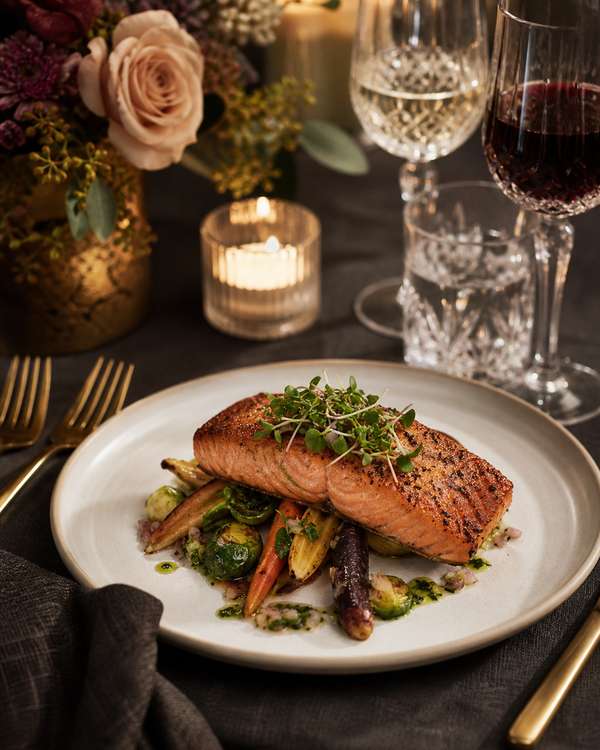
Full-service catering
The caterer handles everything food-related: menu planning, food preparation, on-site cooking or finishing, plated or buffet service, beverage service (sometimes), staffing, dish rental and cleanup. A full-service caterer arrives at the venue hours before the reception, sets up the kitchen, and runs the meal end-to-end.
Price range (mid-2026): $120-$250 per person, sometimes higher.
What is included: Food. Service staff (servers, bartenders, kitchen team). Table linens (sometimes). Glassware, dishware, flatware. Setup and breakdown. Beverages (sometimes; often a separate line item).
What is sometimes extra: Bar (often a separate per-person charge). Cake cutting fee. Specialty dietary accommodations. Premium liquor upgrades. Late-night snacks. Welcome drinks at cocktail hour.
When this is the right call: Most weddings of 50+ guests at non-restaurant venues. The standard model.
Drop-off catering
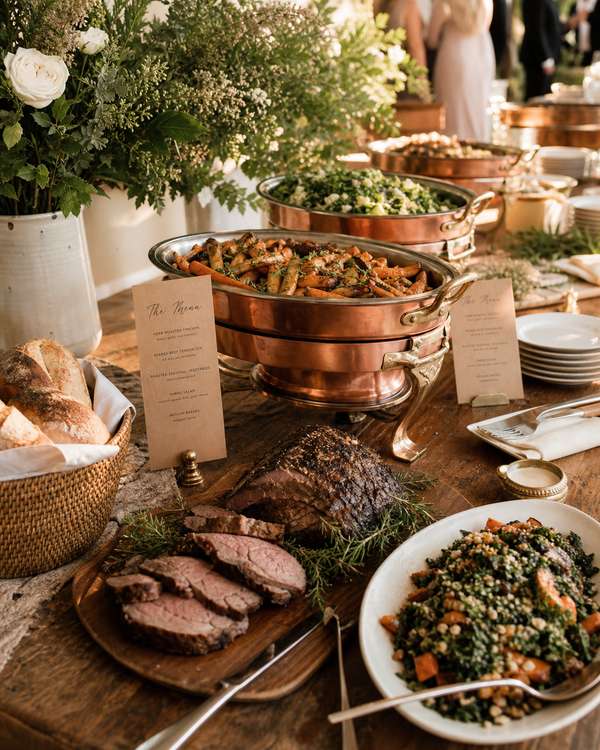
The caterer prepares the food off-site, delivers it to the venue at a scheduled time, sets it up, and leaves. The food is typically served buffet-style or set up for self-service. There is minimal or no service staff on-site beyond delivery.
Price range (mid-2026): $30-$70 per person.
What is included: Food. Delivery. Basic disposable serving setups (sometimes). Setup at delivery (sometimes; sometimes the venue handles).
What is not included: On-site service staff. Hot food maintenance throughout the reception. Cleanup. Drink service. Plating beyond initial setup. Generally not designed for plated dinners.
When this is the right call: Smaller, casual weddings. Backyard or family-home weddings. Weddings with a strong DIY ethos. Weddings where another team (family, hired separate servers, venue staff) is handling on-site food management.
Cocktail-style or heavy hors d'oeuvres reception
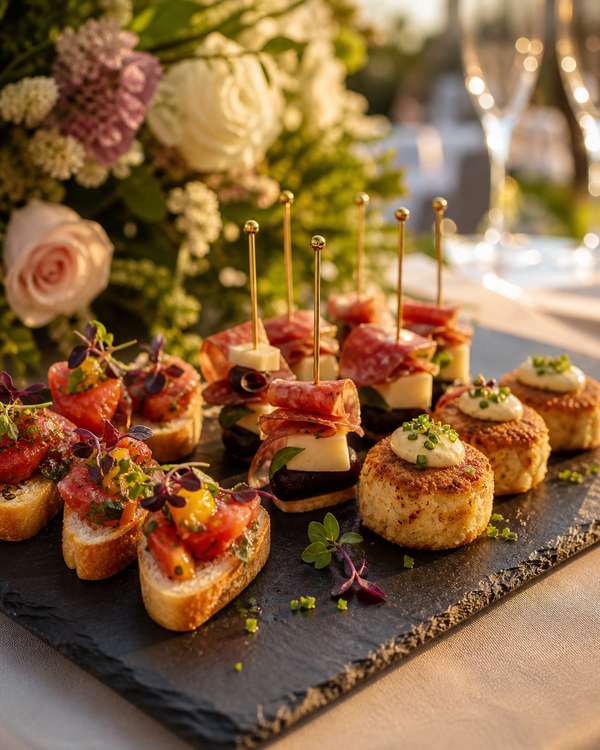
Not a sit-down dinner. The reception is structured around 2-4 hours of passed and stationed appetizers, with substantial enough food that guests do not feel the absence of a meal but lighter than a traditional dinner. Often includes a few "stations" (carving station, pasta station, dessert table) interspersed with passed bites.
Price range (mid-2026): $75-$150 per person, depending on the variety and the staffing.
What is included: Appetizers, stations, passed bites. Service staff (essential to this model since hors d'oeuvres need to circulate). Beverage service (sometimes). Linens for stations and tables (sometimes).
What is sometimes extra: Bar (typically separate). Late-night snack. Dessert beyond what is at the stations.
When this is the right call: Weddings under 4-5 hours total. Weddings with a less formal aesthetic. Weddings with smaller guest counts where a sit-down dinner would feel too formal. Weddings where the budget is tight and a full dinner is not realistic but a sit-down feel is still desired.
What is actually in the per-person price
The per-person number you hear quoted is rarely the bottom-line price. Here is what gets added to the per-person base.
Service charge or gratuity. Almost always a separate line item. Typically 18-22% of the food and beverage subtotal. Some caterers fold this into the per-person price; most do not. Read the contract.
Bar service. Almost always separate from food per-person. Range:
- Beer and wine only: $15-$25 per person
- Beer, wine, and limited spirits: $25-$45 per person
- Full open bar: $40-$70 per person
- Top-shelf premium: $60-$100+ per person
Some couples bring their own alcohol to reduce cost; check the venue's policy and the caterer's corkage fees.
Cake cutting. $1.50-$4.00 per slice if the caterer cuts and serves a cake from another vendor. Adds up. A 150-person wedding with $2.50 per cake cut is a $375 line item that surprises some couples.
Tax. Most jurisdictions tax food and beverage. 7-12% depending on location.
Setup and breakdown. Sometimes folded in; sometimes a separate line item. $200-$800 typically.
Travel or destination fees. If the caterer is traveling to a remote venue, a travel fee may apply.
Tasting fees. Some caterers charge for tastings ($100-$300 per couple); others do not.
Cake plate or knife rental. Yes, this exists. A separate $50-$150 line item at some caterers.
When you compare quotes from different caterers, make sure you are comparing apples to apples on what is in the per-person and what is added. A $95-per-person quote with everything separate can be more expensive than a $135-per-person quote that bundles service, linens, and basic bar.
The per-person math by wedding scale
A practical sense of total catering costs by guest count and model.
100-guest wedding:
- Drop-off catering: $3,000-$7,000 plus minimal extras
- Cocktail-style reception: $7,500-$15,000 with bar
- Full-service plated dinner: $12,000-$25,000 with bar
150-guest wedding:
- Drop-off catering: $4,500-$10,500 plus extras
- Cocktail-style reception: $11,000-$22,500 with bar
- Full-service plated dinner: $18,000-$37,500 with bar
200-guest wedding:
- Drop-off catering: $6,000-$14,000 plus extras (note: drop-off becomes hard to manage at this scale)
- Cocktail-style reception: $15,000-$30,000 with bar
- Full-service plated dinner: $24,000-$50,000 with bar
These numbers are food and beverage only. Add 18-22% service, 7-12% tax, plus any cake cutting, setup, and travel. The all-in number is typically 30-40% above the food-and-beverage subtotal.
In-house vs outside catering
A structural question that affects pricing and selection.
In-house catering: The venue has its own catering operation. You must use them. Hotels, dedicated wedding venues, country clubs, and restaurants typically operate this way. The pricing is what they say it is; you cannot negotiate by getting outside quotes.
Preferred-vendor catering: The venue has a list of approved caterers. You choose from this list. Common at boutique venues, museums, gardens. The list is usually 3-8 caterers; comparing quotes within the list is normal.
Open catering: You can bring any licensed caterer. Common at family homes, some farm and barn venues, some non-traditional venues. You have full flexibility.
If your venue is in-house, the catering decision is mostly the menu choice. If preferred-vendor, you compare 2-3 from their list. If open, you compare 3 caterers like you would any other vendor.
Service style within the meal
Within full-service catering, the service style affects the experience and the cost.
Plated. Each guest receives a plated meal at their seat. Most formal, most service-staff-intensive, often most expensive. Allows for course progression (salad, then entree, then dessert).
Buffet. Guests serve themselves from a station. Less formal, less service-intensive, generally cheaper than plated. Some guests perceive this as a downgrade; some prefer it. Quality buffets at high-end caterers can be excellent.
Family-style. Platters of food are placed on each table; guests serve themselves and pass. The most communal feel. Pricing is similar to plated, sometimes slightly less.
Stations. Multiple themed serving stations around the reception. Guests rotate. Often paired with passed appetizers. Less formal than plated, more interactive. Common in cocktail-style receptions and in modern weddings.
The choice depends on aesthetic, guest count, and venue. Plated works best for 50-150 guests in a formal setting. Buffet scales up to 200+ comfortably and reduces staff needs. Family-style is intimate and works well for 60-120. Stations work best when the reception is not a sit-down dinner.
How to read a catering quote
A clean catering quote should itemize:
- Per-person food charge with the menu specified
- Beverage package (separate, with the package contents)
- Service staff (sometimes per-hour, sometimes folded into per-person)
- Service charge or gratuity
- Tax
- Rentals (linens, china, glassware, flatware) if not included
- Cake cutting fee (if applicable)
- Setup, breakdown, and travel (if applicable)
- Tasting fees (if applicable)
When comparing quotes, build the all-in number for each. Sometimes the quote that looks cheaper on the per-person line is more expensive once you add up extras.
What to ask in the consultation
A few key questions for any catering interview.
Have you catered at our venue before? Familiarity with the venue's kitchen, layout, and service flow matters.
What is the staff-to-guest ratio? A good full-service caterer staffs 1 server per 15-20 guests for plated dinners, 1 per 25-30 for buffets. Lower ratios mean slower service.
Can we do a tasting? Almost every full-service caterer offers tastings. Confirm timing and any cost.
What dietary accommodations can you handle? Vegetarian, vegan, gluten-free, kosher, halal, allergy-specific. Confirm the caterer can handle the range your guests need.
What happens if a key staff member is sick that day? Same question as for any vendor. The good caterer has a backup plan.
What is the cancellation and rescheduling policy? Read the contract. Catering cancellation policies are often more aggressive than other vendors because food is purchased in advance. The FTC's guidance on solving problems with a business is a useful reminder to get cancellation and deposit terms in writing before you sign.
For broader vendor red flags, see Red Flags When Interviewing Wedding Vendors.
What I tell couples who ask me
If the wedding is a standard sit-down format with 80-150 guests at a non-restaurant venue, full-service catering is the default. Compare three caterers from your venue's preferred list (or three local caterers if open catering). Pay particular attention to the all-in number after extras, not the per-person line.
If the wedding is smaller and more casual, drop-off catering can be the right call but only with someone managing on-site (a designated family member, hired separate servers, or the venue staff if they help). Without on-site management, drop-off can leave guests with cold food and an awkward reception.
If you are budget-constrained but want the wedding to feel like a real reception, consider cocktail-style with substantial passed and stationed food. The cost is meaningfully lower than full plated dinner and the energy is often higher.
The most common mistake I watched was under-budgeting catering. Couples allocated 25% of the wedding budget to food and discovered that the quote was 40% of their budget once everything was added. Do not start the search with a per-person number and assume that is the cost. Start with the model and the menu, then build the all-in number, then check the budget.
Frequently Asked Questions
How much does wedding catering cost per person?
It depends on the model. Full-service plated or buffet catering runs $120-$250 per person, cocktail-style or heavy hors d'oeuvres runs $75-$150 per person, and drop-off catering runs $30-$70 per person. Those are food-and-beverage figures only; service, tax, and bar are added on top.
What is not included in a per-person catering quote?
The per-person number is rarely the bottom line. Service charge or gratuity (typically 18-22%) and tax (7-12%) are almost always separate, and bar service is usually quoted separately at $15-$25 per person for beer and wine up to $60-$100 or more for top-shelf. Cake cutting, setup and breakdown, travel, and tasting fees can add more.
What is the difference between full-service and drop-off catering?
Full-service caterers handle everything: menu, on-site cooking, plated or buffet service, staffing, and cleanup, at $120-$250 per person. Drop-off caterers prepare food off-site, deliver and set it up, then leave, at $30-$70 per person with little or no on-site staff. Drop-off only works well when someone else manages the food on-site.
How much does it cost to cater a 100-guest wedding?
For food and beverage, expect roughly $3,000-$7,000 for drop-off, $7,500-$15,000 for cocktail-style with bar, and $12,000-$25,000 for a full-service plated dinner with bar. Add 18-22% service, 7-12% tax, and any cake cutting, setup, and travel fees to reach the all-in number.
How many servers should a wedding caterer provide?
A good full-service caterer staffs about 1 server per 15-20 guests for plated dinners and 1 per 25-30 for buffets. Lower ratios mean slower service. Ask for the staff-to-guest ratio in the consultation so you can compare caterers fairly.
Further reading
For where catering sits in the broader wedding budget, see Wedding Budget Allocation: What Percent Goes Where. For the booking timeline, see When to Book Each Wedding Vendor. For broader vendor red flags, see Red Flags When Interviewing Wedding Vendors.
The International Caterers Association maintains a directory of professional wedding caterers.