Lab-Grown Diamond Wedding Rings in 2026
Quick answer: Lab-grown won. Sixty-one percent of couples picked a lab-grown center stone last year, average ring spend came in around $4,300 versus $7,000 for natural, and even De Beers gave up its own lab-grown jewelry brand. Here is what the sales floor will not volunteer: wholesale lab-grown prices are down 96 percent since 2018 and still fell 13 percent this year, while retail prices barely moved. The store's markup on that stone frequently exceeds 80 percent, which makes the ring the single most negotiable purchase of your wedding. Buy the certificate, not the lighting, and treat resale as zero for both your budget math and your insurance schedule.
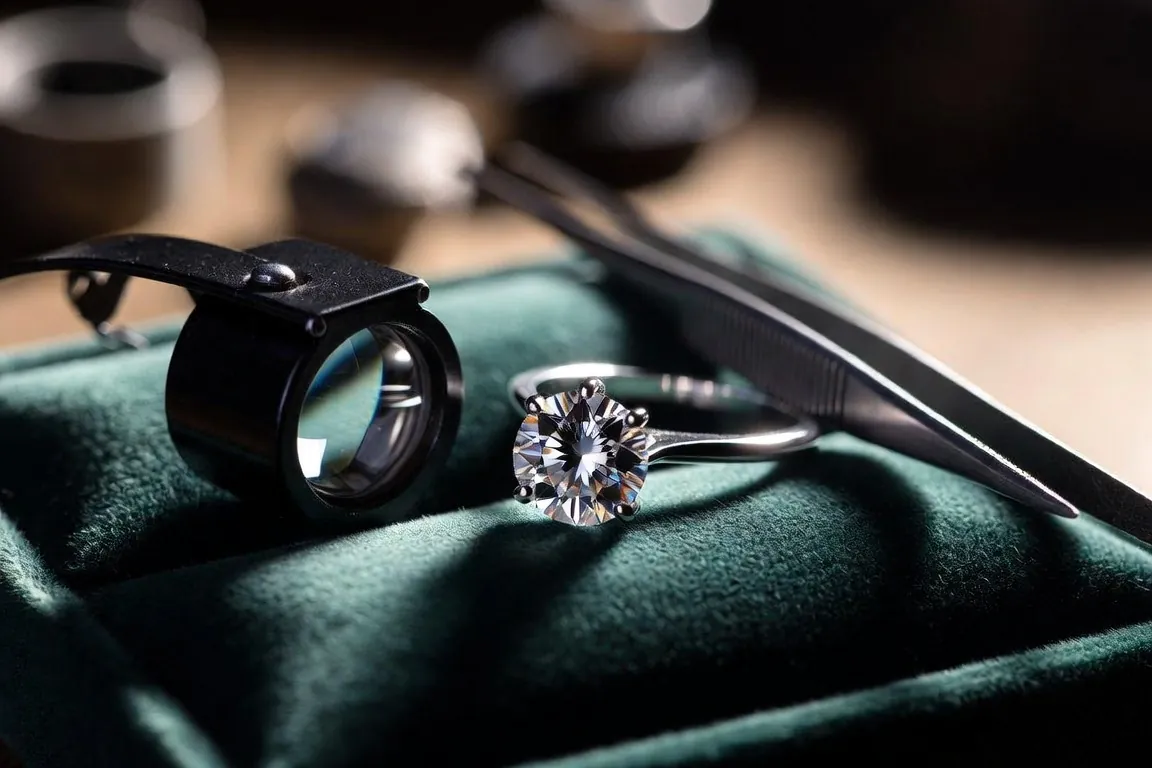
Twenty years of wedding work taught me that every vendor category has one number the customer never sees, and the whole negotiation lives inside it. For caterers it is the per-plate food cost. For florists, it was my wholesale invoice. For jewelers in 2026, it is the wholesale price of a lab-grown diamond, and I have never, in any category, seen a number this far from the price tag.
So before you set foot in a showroom, let me hand you the industry's own math.
What happened to the price of a diamond
In 2018, the trade began tracking lab-grown wholesale prices. That index is now down 96 percent. Not a typo. The stones kept getting cheaper to grow, mostly in China and India, production outran demand, and by early 2026 US retailers were sitting on inventory equal to roughly half a year of sales. This summer a 3-carat top-grade round wholesaled around $126 a carat. De Beers, which launched its Lightbox brand in 2018 to sell lab-grown at a then-shocking $800 a carat, shut the whole brand down in May 2025 after a nine-figure annual loss, and its parent company has spent 2026 trying to sell De Beers itself at a fraction of its old book value.
Retail did not follow the collapse down. Industry analysts measured retailers holding markups above 80 percent over wholesale this year, essentially unchanged from last year, with one of the field's most-quoted analysts saying plainly that retail prices are still too high. That gap is not a scandal; it is a business model absorbing a collapsing input cost. But you should negotiate like someone who knows it exists, the same way I taught couples to question the venue's "preferred vendor" fees in our vendor red flags guide.
One honest caveat pointing the other way: mid-2026 brought the first sign of a floor, with some growers raising prices 25 to 30 percent and 1-carat wholesale ticking up for the first time. Nobody should buy in a panic, but the era of every-quarter-cheaper may be ending.
What rings actually cost in August 2026
| Stone | Lab-grown, typical retail | Natural, comparable quality | Notes |
|---|---|---|---|
| 1 carat solitaire | $700 to $1,500 certified | $4,500 to $6,500 | Budget DTC and marketplace stones run lower still |
| 1.5 carat | Roughly $1,500 to $3,500 | $8,000 to $12,000 | Interpolated range; fewer published benchmarks |
| 2 carat | $2,100 to $6,000 | Around $18,000 | The gap widens with size |
Ranges compiled August 2026 from retailer pricing guides and trade analysis; spot prices move constantly and vary with cut quality and certification. The wholesale index data and markup findings are from Edahn Golan Diamond Research and Paul Zimnisky analyses reported in trade press this summer.
Where to buy sits on a spectrum. The big online houses, Blue Nile, James Allen, Brilliant Earth, publish inventory with 360-degree imaging and compete hard; comparison guides this year put Blue Nile typically 5 to 15 percent under Brilliant Earth for comparable stones, with James Allen mid-pack and the best inspection tools. Independent local jewelers are fully in the category now and will often match online prices when you show them a listing, which is the exact play I used to watch sharp couples run on florists. And the marketplaces go lower still: IGI-certified lab-grown solitaire rings on Amazon now include complete 1-carat rings in 14k gold under $1,000, a sentence that would have read as a scam in 2020 and is simply the market now. Buy there only with a full certificate in the listing, and verify the report number on the lab's site the day it arrives.
The certificate changed this year, so read this part
Two labs matter, and they diverged in 2025. IGI grades roughly two-thirds of the world's lab-grown stones and still issues the traditional full report: color grade, clarity grade, cut, the works. GIA, the lab most buyers know by name, stopped issuing full 4Cs grades for lab-grown diamonds as of October 1, 2025, replacing them with two descriptive tiers, Premium and Standard, on the logic that nearly all lab stones cluster in a narrow high band anyway.
Practical translation: for a lab-grown stone in 2026, an IGI report is the normal, useful document, and a GIA "Premium" designation tells you less than an IGI report does. Whichever lab, the certificate is the product; the setting is jewelry, but the stone is the certificate. Also know the legal vocabulary: FTC rules require sellers to clearly disclose origin with terms like "laboratory-grown," and they may not call a lab stone "natural" or "genuine." A listing that dances around those words is telling you who you are dealing with.
Is the stone itself real? Chemically and optically, yes, it is diamond, grown over weeks by CVD or HPHT machines instead of over eons by geology. On your hand, no jeweler can tell without instruments. The only differences that survive contact with daily life are the price and the resale, which brings us to the uncomfortable part.
The resale truth, said plainly
A lab-grown diamond has effectively no secondary market. Dealers this summer were quoted saying flatly that there is no resale value, and the anecdotes are brutal: five-figure lab rings from the early 2020s now valued mostly for their gold. Guides put typical recovery at 10 to 30 percent of retail if you can sell at all, versus perhaps 25 to 50 percent for natural stones, which are no investment either. The structural reason will not improve: a used lab stone competes forever with a newly grown one that gets cheaper every year.
I tell couples to reframe rather than mourn. You are not buying a store of value; nobody's engagement ring ever really was. You are buying a symbol, and the collapse in price means the same budget now buys the symbol plus a honeymoon upgrade, or a bigger stone, or, my favorite answer, a smaller line item in a wedding budget that always needs the slack somewhere else. Our budget allocation guide shows exactly where a saved $3,000 does the most good, and if the ring purchase is your first wedding buy, the vendor booking timeline will keep the rest of the sequence honest.
Insure it accordingly: schedule the ring at replacement cost, revisit the appraisal every couple of years, and expect the premium to drift down with the category. Overpaying insurance on a 2022 appraisal is the quietest way to keep losing money on a stone that already got cheap.
How to run the purchase like a vendor negotiation
- Pick the specs first, away from showroom lighting. Round, 1 to 1.5 carats, colorless-range, eye-clean clarity covers most tastes; an ideal cut matters more to sparkle than one clarity grade.
- Pull three quotes on the same certificate class. One big online house, one local independent, one marketplace listing. Print them.
- Let the local jeweler match. Independents made real unit-sales gains this year and know the online prices better than you do. Many will meet them for the sale and the future service relationship, and a standing local relationship for cleaning, prong checks, and resizing has real value.
- Negotiate the setting too. With stone margins compressing, stores lean harder on settings and trade-up programs. A "free" trade-up policy that requires spending double is not a gift; you now know why it exists.
- Verify the certificate number online before the return window closes. Thirty seconds, and it converts the biggest purchase-anxiety in the process into a checkbox.
The ring is the one wedding vendor purchase you will still be wearing in thirty years. In 2026 it is also, quietly, the best-priced it has ever been, for anyone willing to look past the velvet tray to the number underneath it.
Sources: The Knot 2025 Real Weddings Study (published February 2026), Edahn Golan LGD wholesale index and Tenoris retail data, JCK and Rapaport trade reporting through August 2026, GIA program announcements, FTC Jewelry Guides, and De Beers/Anglo American disclosures. Retail price ranges are market observations, not quotes; certification and pricing should be verified per stone.
Frequently Asked Questions
Are lab-grown diamonds real diamonds?
Chemically and optically yes: same carbon crystal, grown by machine over weeks instead of by geology over eons. The FTC requires sellers to disclose the origin with terms like laboratory-grown, and forbids marketing them as natural.
How much cheaper are lab-grown diamond rings in 2026?
Typically 80 to 85 percent below a comparable natural stone: roughly $700 to $1,500 for a certified 1-carat lab-grown solitaire against $4,500 to $6,500 natural, with the gap widening at 2 carats and above.
Do lab-grown diamonds hold their value?
No. Plan on essentially zero resale value; recovery of 10 to 30 percent of retail is the optimistic published range, and dealers increasingly decline lab stones outright. Natural diamonds also resell poorly, just less absolutely. Buy the ring as a symbol, not an asset, and insure it at replacement cost.
Should the certificate be IGI or GIA?
For lab-grown in 2026, IGI is the practical standard and still issues full color and clarity grades. GIA stopped traditional 4Cs grading for lab-grown in October 2025 in favor of broad Premium and Standard tiers, so an IGI report actually tells you more about a lab stone.