Wedding Planner Costs, Wedding Photographers, and Vendor Questions Couples Ask Most
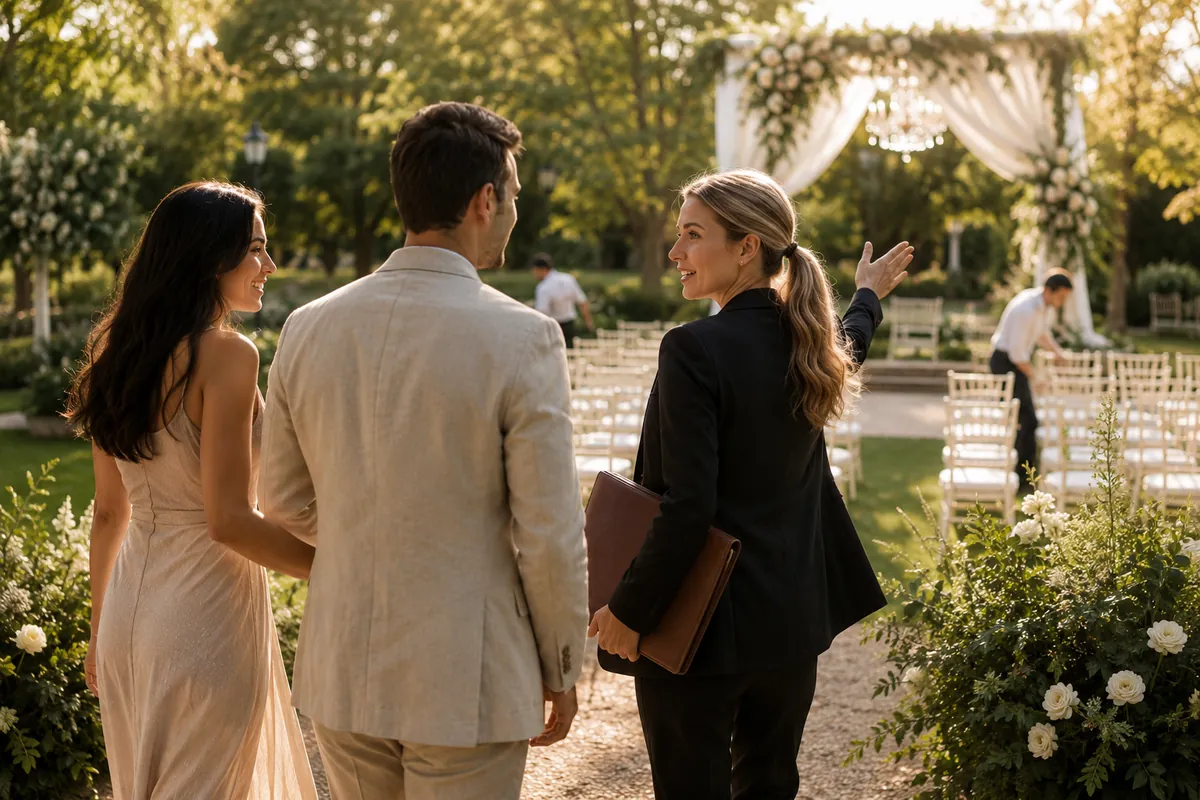
These are the questions that come up at the very start of planning, when a couple is figuring out who to hire and how much it will all cost. The answers come from twenty years of doing wedding florals alongside the planners, photographers, and venue coordinators who staff the day, watching what worked and what cost more than it should have. The numbers are 2026 figures from across the US wedding industry.
Here is the fastest way to see what the three planner tiers cost and what you actually get for the money.
| Service tier | Typical 2026 cost | When the planner joins | What it includes |
|---|---|---|---|
| Day-of / month-of coordination | $1,500 to $3,500 | 4 to 6 weeks out | Final timeline, vendor confirmations, ceremony rehearsal, day-of execution |
| Partial planning | $3,500 to $7,500 | 3 to 6 months out | Vendor management, design direction, contract review, plus all day-of coordination |
| Full planning | $7,500 to $25,000 | Engagement onward | Budget, venue scouting, vendor sourcing, design, guest management, full day-of |
Source note: tier ranges reflect 2026 US wedding-industry pricing. For benchmarks, The Knot's wedding planner cost guide reports an average planner spend near $2,100, with full-service starting around $3,000, partial around $1,250, and day-of around $800, and WeddingWire's wedding planner cost guide tracks similar figures. Luxury markets (New York, Los Angeles, San Francisco, Aspen, Hawaii) run materially higher.
Common questions
How much does a wedding planner cost?
Wedding planner cost in 2026 typically runs $2,500 to $15,000 in most US markets, with significant variation by region and service tier. Three common service tiers: month-of coordination (the planner runs the wedding day and the four to six weeks leading up to it) at $1,500 to $3,500; partial planning (the planner joins three to six months before the wedding and handles vendor management) at $3,500 to $7,500; full planning (the planner is involved from engagement through the wedding day) at $7,500 to $25,000. Luxury markets (New York, Los Angeles, San Francisco, Aspen, Hawaii) run materially higher. Couples who do not hire a planner typically end up doing the planner's job themselves, which is a real time commitment.
What does a wedding planner charge?
Wedding planners charge using one of three structures: flat fee per wedding (most common for full-service planning), percentage of total wedding budget (typically 10 to 15 percent, common in luxury markets), or hourly billing for à la carte planning support ($75 to $200 per hour). The flat-fee structure is the cleanest for couples to budget against. Beware of "free planner" offers from venues; the planner in those cases works for the venue, which means their incentives align with selling you more services rather than getting you the best value across vendors. An independent planner you pay directly has clearer incentives than one bundled into venue or vendor packages. Whoever you pay, the FTC's guidance on protecting yourself when you pay a vendor is worth reading before any large deposit changes hands.
Are wedding planner prices worth it?
For weddings under $25,000 in low-to-mid cost markets, partial planning or month-of coordination is usually worth the cost; full planning often is not. For weddings $30,000 and up, full planning typically pays back the cost in vendor negotiations alone (planners have relationships and volume that get couples 5 to 15 percent better pricing across photographer, florist, caterer, and rentals). For destination weddings or weddings with logistics complexity (multi-day events, sixty or more out-of-town guests, multiple venues), a planner is the difference between an experience couples remember warmly and one they remember as a series of crises. For a simple thirty-person backyard wedding, you probably do not need one.
How much should a wedding photographer cost?
Wedding photographer cost in 2026 typically runs $3,500 to $9,000 for eight hours of coverage in most US markets, with the upper end common in luxury markets and the lower end common in smaller cities. The deliverables matter more than the hour count: ask whether you receive a print release for digital files (you should), how many edited images you receive (typically 400 to 800 for a full wedding day), and how the photographer handles backups during the shoot (two cameras with dual card slots is the professional standard). Cheaper photographers (under $2,500) are often newer to the business and may produce uneven results; higher-end photographers ($10,000 and up) deliver a more polished editing style but the difference in raw skill above $4,500 is smaller than it looks.
What is the average wedding photographer cost near me?
The average varies meaningfully by metro area. Approximate 2026 mid-market ranges: New York City $5,500 to $9,500; Chicago $4,200 to $7,200; Atlanta $3,500 to $6,000; Dallas $3,800 to $6,500; Denver $3,800 to $6,500; Seattle $4,500 to $7,500; rural Midwest or South $2,200 to $4,500. Get three quotes from photographers whose published portfolios match the style you want (light and airy, dark and moody, photojournalistic, traditional). The portfolio is the strongest signal of fit; price comes second. A photographer whose portfolio matches your vision and who costs 30 percent above your initial budget is almost always a better choice than one who costs 30 percent below but whose portfolio is closer to a different style.
How do I find a wedding florist near me?
Three reliable paths. First, ask your venue for their recommended florist list; venues work with a small number of florists repeatedly and have direct visibility into who delivers and who does not. Second, search Instagram for your city plus "wedding florist" and review the recent work; florists who have not posted in three months may be out of business or in transition. Third, ask your wedding planner if you have one; planners have relationships with florists who fit a range of budgets and styles. Avoid Yelp and TheKnot as primary discovery channels; both surface high-marketing-spend vendors rather than the best ones. The best florist in a city often has minimal online presence and gets bookings entirely by referral.
What does a wedding florist near me typically charge?
Wedding floral budgets typically run 8 to 12 percent of the total wedding budget in 2026, which works out to $3,500 to $9,500 for a wedding in the $35,000 to $75,000 range. The components: personals (bridal bouquet, bridesmaid bouquets, boutonnieres, corsages) at $300 to $1,200; ceremony arrangements at $400 to $2,500; reception centerpieces at $80 to $400 per table; statement pieces (arches, installations, hanging arrangements) at $1,500 to $8,000 each. Florists charge based on stem count and labor, not just the visible flowers; an arrangement that looks lush typically uses 30 to 60 percent more flowers than it appears to use. Get the proposal itemized so you can adjust specific components if the total exceeds budget.
What are the best wedding planning websites?
In 2026, the most useful wedding planning websites combine vendor directories with planning tools: TheKnot and WeddingWire (largest vendor directories, marketing-heavy), Zola (cleanest interface for registry plus planning), Joy (good for guest experience and rsvp tracking), and HoneyBook (more vendor-facing but used by some couples). For honest vendor reviews, no single platform is reliable because review verification is uneven and vendors actively curate their public reviews. The best research tool is direct conversation with three couples who used a specific vendor; planners and venue coordinators can usually connect you. Treat the directories as starting points for discovery, not as endorsements of any specific vendor; the FTC's general advice on spotting and avoiding scams is a good reality check when a vendor's marketing looks too polished to question.
What does a typical wedding planning service include?
A typical full-service wedding planning engagement includes: budget development and tracking, venue scouting and contract review, vendor recommendations and contract review, design and aesthetic direction, RSVP and guest management, ceremony rehearsal coordination, day-of timeline development and execution, and ongoing communication throughout planning. Partial planning typically excludes the early budget and venue work but includes the rest. Month-of coordination typically includes only the final timeline, vendor confirmation, and day-of execution. Ask any planner you interview for a written scope of services; the difference between planners is often what is NOT included rather than what is. The biggest variable: how many vendor meetings the planner attends with you.
Where do I start when planning a wedding?
The order that works best in practice: set the total budget first, then pick the date (which affects venue availability and price), then book the venue, then book the photographer (good ones book 12 to 18 months out), then the planner (if hiring one), then the remaining vendors. Most couples want to pick the venue first, but locking the venue without a budget often produces decisions that lock out other priorities. The single most important early decision is the guest count, which drives everything from venue size to caterer cost to floral piece count. Decide who is invited before deciding what kind of wedding it is; the wedding scales to fit the guest count, not the other way around.